Understanding Columbia's Challenging Soil Geology
If you've noticed cracks, settling, or sudden sinkholes in your yard or driveway, you're not alone. Homeowners throughout Columbia face a common culprit: the region's distinctive and problematic soil composition. The ground beneath your home isn't just dirt. It's a complex mix of geological layers that have shaped the landscape over millennia, and unfortunately, those same layers can wreak havoc on concrete structures.
The Boone County area, which includes Columbia, sits atop three major soil and geological challenges that homeowners need to understand. These aren't minor inconveniences. They're fundamental geological realities that affect how concrete settles, cracks, and fails over time. Whether you're planning new Concrete Driveways or dealing with existing damage, understanding what's happening beneath the surface is essential.
Claypan Soil: The Hidden Layer That Shifts Everything
Beneath many properties in Columbia, you'll find a dense, nearly impermeable layer of clay called claypan. This layer forms naturally over thousands of years as clay particles accumulate and compact. While clay itself isn't inherently bad for construction, claypan presents a unique problem: it doesn't drain water effectively. When rainfall occurs, water sits above the claypan rather than percolating down into deeper soil layers. This creates hydrostatic pressure that pushes upward against concrete slabs, foundations, and driveways.
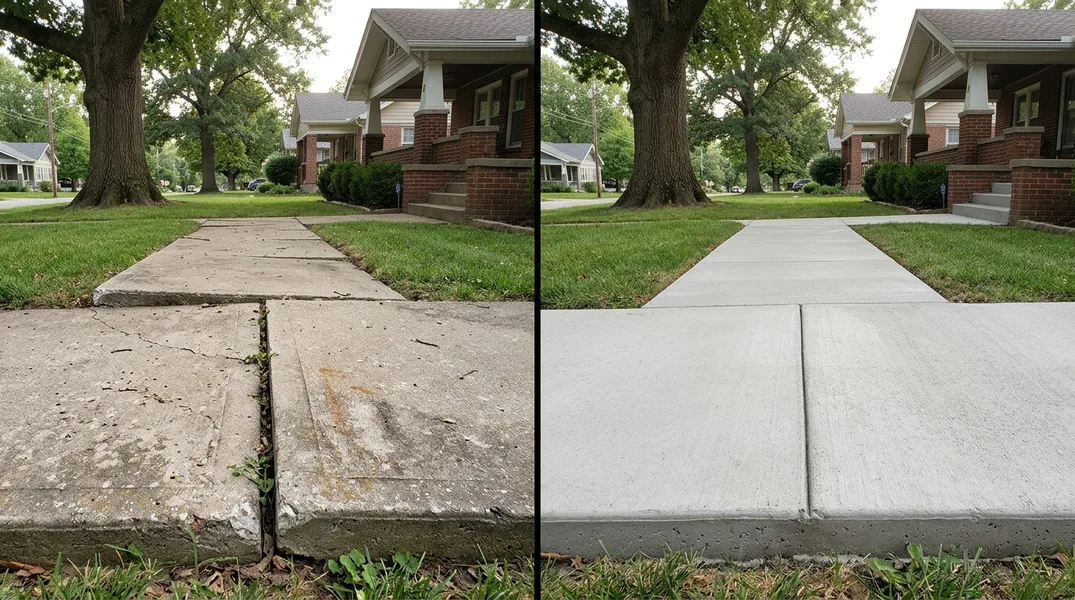
The real damage happens during freeze-thaw cycles. When water trapped above the claypan freezes, it expands with tremendous force. This expansion can lift your concrete driveway, creating heaves and cracks that worsen year after year. Additionally, claypan soil shrinks and swells dramatically as moisture levels change seasonally. During dry summers, the clay contracts, leaving voids beneath concrete. When fall rains arrive, those voids fill with water and the clay expands again. This constant movement means your concrete is literally moving up and down, which inevitably leads to cracking and structural failure. Many homeowners in the area have experienced this cycle repeatedly, making Concrete Repair & Resurfacing a recurring expense.
Mexico Silt Loam: Surface Instability and Settling Issues
Above the claypan layer, you'll typically find Mexico silt loam, a soil type that covers much of Boone County. While this soil is excellent for agriculture, it presents challenges for concrete construction. Silt loam is relatively loose and unstable compared to more compacted soil types. It compresses easily under the weight of concrete, and when it does, your slab settles unevenly. This differential settling is one of the leading causes of concrete cracking and failure in the region.
The Mexico silt loam also has poor drainage characteristics, similar to claypan. Water moves through it slowly, meaning moisture accumulates around the base of your concrete. This persistent dampness accelerates erosion of the soil beneath your slab, creating voids and weak spots. Over time, sections of concrete lose their base support and begin to sink or crack. If you've noticed one corner of your driveway lower than the rest, or if your concrete has developed a noticeable slope where there wasn't one before, Mexico silt loam settling is likely the cause. This is why proper site preparation and base compaction are absolutely critical when installing new concrete in Columbia.
Karst Geology and Sinkhole Risk in Boone County
Perhaps the most dramatic soil challenge facing homeowners in Boone County is karst geology. The region sits atop limestone bedrock, and over millions of years, naturally acidic groundwater has dissolved passages and caverns within that limestone. These underground voids aren't always stable. When the roof of a cavern collapses or when water flow changes, the ground above can suddenly drop several feet, creating a sinkhole. While sinkholes are less common than settling or cracking, they're catastrophic when they occur, and they can happen without warning.
Sinkholes in the Columbia area have damaged homes, swallowed vehicles, and destroyed driveways and patios. The risk is highest in areas with certain soil and geological profiles, particularly where there's a combination of claypan, silt loam, and shallow limestone. If your property has experienced unexplained settling, sudden cracks, or if neighbors have reported sinkhole activity, it's worth having a professional assessment. This is one situation where DIY solutions won't work. You need expert evaluation and proper Concrete Repair & Resurfacing from professionals who understand Boone County geology.
Why Standard Concrete Installation Fails in Columbia
Many concrete contractors use the same installation methods everywhere, regardless of local soil conditions. In Columbia, this approach is a recipe for failure. Standard concrete installation typically involves minimal site preparation, shallow base layers, and little consideration for drainage. These shortcuts might work in areas with stable, well-draining soil, but they're inadequate for the challenging conditions created by claypan, silt loam, and karst geology.
Proper concrete installation in this region requires extra steps that many contractors skip. The base must be thicker and more thoroughly compacted to compensate for the instability of Mexico silt loam. Drainage systems must be designed to redirect water away from the concrete and prevent it from accumulating above the claypan layer. In some cases, soil stabilization products or reinforced base layers are necessary. These additional measures add to the upfront cost, but they're the difference between concrete that lasts five years and concrete that lasts twenty. If you're considering new Concrete Driveways or Concrete Patios, it's essential to work with a contractor who understands local soil challenges and builds accordingly.
Protecting Your Concrete Investment in Columbia
Understanding the geological challenges beneath your property is the first step toward protecting your concrete investment. If you already have concrete that's showing signs of stress, cracking, or settling, don't wait for problems to worsen. Early intervention through proper Concrete Repair & Resurfacing can extend the life of your driveway or patio significantly. Addressing drainage issues, filling voids beneath the slab, and applying protective sealants can make a real difference.
For new construction projects, the time to plan for Columbia's soil challenges is before the concrete is poured. This means investing in proper site assessment, adequate base preparation, and drainage solutions designed for local conditions. Yes, this approach costs more upfront than cutting corners, but it's a genuine investment in durability. Columbia Concrete has the local expertise to design and install concrete that stands up to claypan, silt loam, and karst geology. Whether you're building new or repairing existing concrete, we understand what works in this region and what doesn't. Contact us at (573) 296-4846 or request a free estimate to discuss your specific situation and learn how we can help protect your property.
Looking for a professional concrete contractor in Columbia? Columbia Concrete responds fast for all your concrete needs.
Get a Free QuoteOur services: Concrete Driveways · Concrete Patios · Stamped & Decorative Concrete