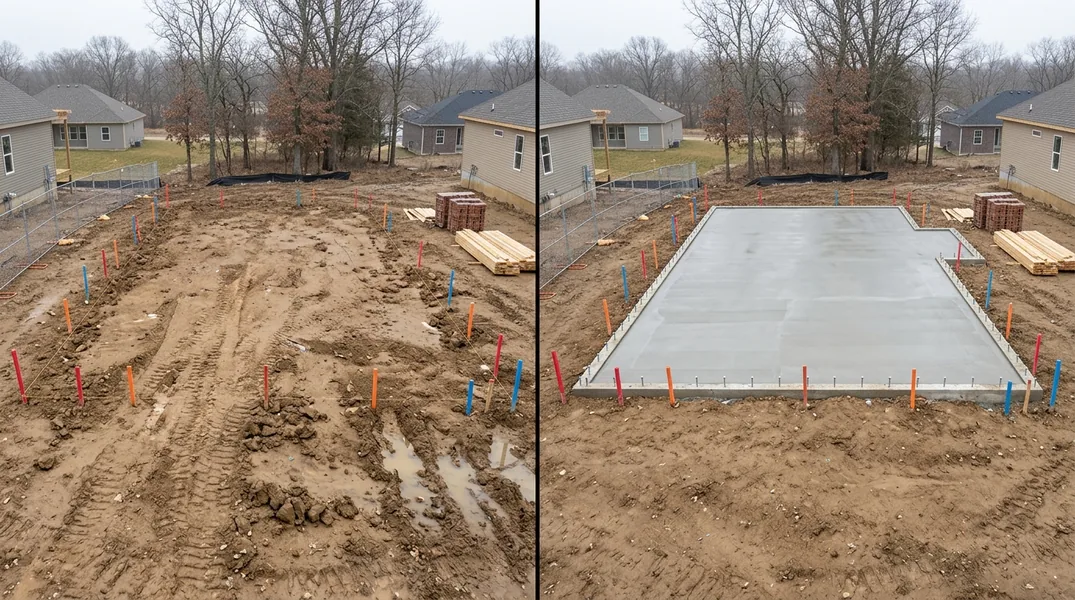
Understanding New Construction Concrete Slabs in Missouri
When you're buying a new construction home in Columbia, the concrete slab beneath your house is one of the most critical structural components you'll inherit. Unlike older homes with basements or crawl spaces, most modern new builds rest on a concrete slab foundation, which serves as both the foundation and the floor system for your home. Understanding how these slabs are constructed and what to look for during the buying process can save you thousands of dollars in future repairs.
A new construction concrete slab typically consists of a layer of gravel for drainage, a moisture barrier, reinforcing wire or rebar, and then the concrete pour itself. The quality of each component matters significantly. If the gravel base isn't properly compacted, if the moisture barrier has gaps, or if the concrete mix isn't appropriate for Missouri's climate, you could face settling, cracking, or moisture intrusion problems down the road. These issues don't always appear immediately, which is why a thorough inspection before closing is essential.
The Importance of a New Home Foundation Inspection Before Closing
A new home foundation inspection in Missouri is not optional if you want to protect your investment. Many homebuyers assume that because a home is new, the foundation must be sound. This assumption has cost plenty of families dearly. Builders are motivated to complete projects on schedule and within budget, and sometimes that means cutting corners on foundation preparation or curing time. A third-party inspector who specializes in foundations can identify problems that a general home inspector might miss.
During a foundation inspection, a qualified professional will look for visible cracks in the concrete, check for proper slope and drainage around the perimeter, test the moisture barrier, and assess whether the slab has settled unevenly. They'll also examine any basement slab conditions if your new build includes one. In Columbia, where seasonal moisture fluctuations are common, proper drainage and vapor barriers are particularly important. Don't skip this step just because the home is brand new. The cost of an inspection (typically $300 to $500) is insignificant compared to the cost of fixing foundation problems after you've closed.
Basement Slab Issues in New Build Homes
If your new construction home includes a basement, the basement slab new build quality deserves special attention. Basement slabs are more prone to moisture problems than above-grade slabs because they're in direct contact with soil and groundwater. A poorly constructed basement slab can lead to water seepage, efflorescence (white mineral deposits on the concrete), mold growth, and structural instability over time. During your pre-closing inspection, have the inspector pay particular attention to any signs of moisture, including damp spots, staining, or musty odors.
The slab should also be inspected for proper curing. Concrete that hasn't fully cured can develop strength issues and is more susceptible to cracking and water penetration. If you notice that the basement slab feels soft, shows surface deterioration, or has excessive cracking patterns (not just the minor hairline cracks that are normal), this is a red flag. Ask the builder for documentation of the concrete mix design, curing time, and any testing that was performed. If they can't provide this information, that's another warning sign that warrants further investigation before you sign the final paperwork.
Common Concrete Slab Problems in New Construction
Several problems are surprisingly common in new construction concrete slabs, even in homes built by reputable builders. Settling and differential movement occur when the soil beneath the slab hasn't fully compacted or when there are voids in the base preparation. This causes the slab to crack or develop high and low spots. Uneven slabs can cause doors to stick, create trip hazards, and allow water to pool in certain areas, which then seeps into the concrete and causes further damage.
Another frequent issue is inadequate drainage around the foundation perimeter. If water isn't properly directed away from the slab, it pools against the foundation and forces its way through the concrete over time. This is especially problematic in Missouri, where heavy rains and spring thaw can create significant moisture challenges. Additionally, some builders use concrete mixes that aren't appropriate for the local climate, resulting in rapid deterioration, scaling, or spalling of the surface. Before closing, verify that the concrete specifications meet or exceed Missouri building codes and are suitable for our regional weather patterns.
What to Look for During Your Final Walkthrough
Your final walkthrough before closing is your last opportunity to identify slab-related issues while you still have leverage with the builder. Bring a flashlight and spend time examining the concrete surfaces throughout the home. Look for cracks that are wider than 1/8 inch, especially if they follow a pattern or seem to be growing. Check the basement (if applicable) for any signs of moisture, including wet spots, efflorescence, or water stains on walls above the slab. Walk the perimeter of the home and verify that the grade slopes away from the foundation at least 6 inches over 10 feet.
Pay attention to how doors and windows operate. If they're sticking or not closing smoothly, this could indicate that the slab has settled unevenly. Look at the garage floor as well, if you have one. Any significant cracking, displacement, or moisture in the garage slab suggests similar problems may exist elsewhere. If you notice anything concerning during your walkthrough, document it with photos and immediately notify the builder in writing. Request that they have their concrete contractor evaluate and repair any defects before closing. Don't accept vague promises or verbal assurances. Get everything in writing.
Protecting Your Investment: Next Steps After Closing
Once you've closed on your new construction home and thoroughly inspected the concrete slab, your responsibility for maintenance begins. Proper care in the first year can prevent many common problems from developing. Avoid parking heavy vehicles on the slab until it's fully cured (typically 28 days after pour, though some builders recommend waiting longer). Don't allow water to pool or sit on the surface for extended periods. Keep gutters and downspouts clean and ensure they direct water at least 5 feet away from the foundation.
If you do notice cracks, settling, or moisture issues developing after you've moved in, don't ignore them hoping they'll go away. Small problems become expensive ones quickly. For any concrete repair or resurfacing needs related to your new construction slab, Columbia Concrete offers professional assessment and repair services. Whether it's addressing early cracks, improving drainage, or dealing with moisture issues, having a qualified concrete contractor evaluate the problem is the smart move. If you'd like a professional evaluation of your new construction concrete slab or have concerns about foundation issues, contact Columbia Concrete today at (573) 296-4846 or request a free estimate to discuss your specific situation.
Looking for a professional concrete contractor in Columbia? Columbia Concrete responds fast for all your concrete needs.
Get a Free QuoteOur services: Concrete Driveways · Concrete Patios · Stamped & Decorative Concrete